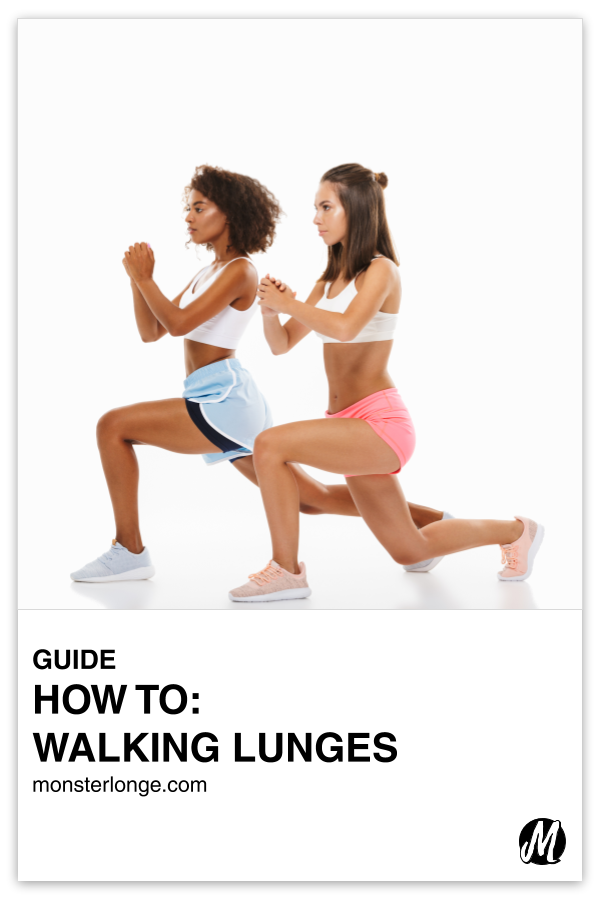
How To: Walking Lunges
Unilateral exercises involve using the muscles on one side of the body at a time rather than together in performance of a movement. Doing so is great for isolating muscles and avoiding imbalances between muscle groups, which goes a long way toward appearing symmetrical…in addition to injury prevention, if you care about that sort of thing! As an added bonus, there’s also something known as the “crossover effect”, in which unilateral training strengthens the unused side as well as the one that’s being trained. It’s for these reasons that unilateral exercises should be a part of your training regimen.
One example of a unilateral exercise are lunges, single leg movements that primarily challenge stability and balance.
As you know, there are a variety of lunges. So what differentiates walking lunges from the others?
It’s a shot in the dark, but the walking part is probably what sets walking lunges apart from something like…ummmm…stationary lunges, which are…ummmm…performed…stationary. And by walking, not only are virtually all of the muscles in the lower body activated as they are in a stationary lunge but the muscles comprising the core are brought more into play to keep the body stable and balanced as it takes each step through space. Continue reading How To: Walking Lunges