
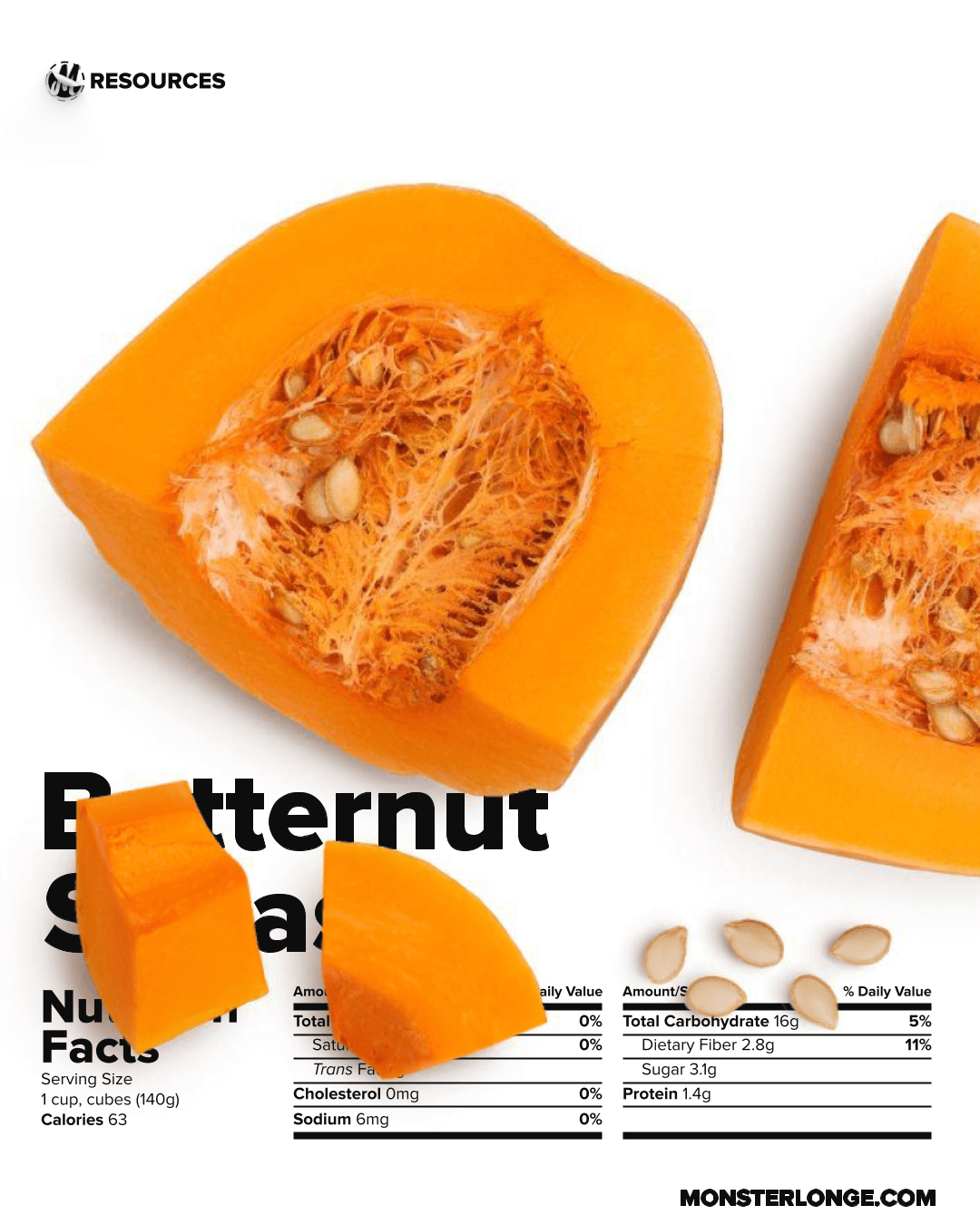
Why on earth would you ever eat fucking butternut squash?!?!, you ask incredulously.
Good question!
Butternut squash = 🤮
But here’s the thing…
Carbs from food are converted into glucose, which is the body’s preferred energy source. Whatever glucose isn’t immediately used for physical activity and cellular processes gets stored for later use in the muscles and the liver as glycogen. When you work out, that stored glycogen gets broken down to release glucose to produce energy in the form of ATP for muscle contraction. After a workout, those depleted glycogen stores need to be replenished to prepare the body for future activities. So because starchy foods generally contain more carbs than non-starchy foods, a starch like butternut squash is a great choice as part of a postworkout meal.
Thanks to its carbohydrate profile, butternut squash is good for exercise recovery. That, however, isn’t the only thing the fruit has going for it.1Often categorized as a vegetable, squash is actually a fruit by botanical standards because it contains seeds. Butternut squash also provides nutrients like potassium, vitamin C, and beta-carotene, all of which contribute to recovery in their own respective ways.2For instance, potassium helps with the transport of glucose to muscle cells for the replenishment of glycogen and to provide them with the fuel they need for the growth and repair of damaged muscle. As for vitamin C, it reduces inflammation and promotes tissue repair. Lastly, beta-carotene, the pigment that gives butternut squash its distinct color, has antioxidant properties that reduce the oxidative stress and damage to muscle tissue that’s produced during exercise.
For anyone who works out, there are reasons to eat butternut squash. But beyond what it has to offer in that arena, butternut squash also has a wide range of health benefits. A few of those effects from the fiber and assortment of vitamins, minerals, and antioxidants include blood sugar regulation, improved cholesterol levels, lower blood pressure, immune system support, and prevention of chronic conditions like heart disease and certain types of cancer, such as colorectal cancer, for example.
Yeah, I know, butternut squash sounds mighty, mighty tasty right about now!
NOTE: The benefits of butternut squash apply to most, if not all, varieties of squash.

Butternut Squash Nutrition Facts
Serving Size 1 cup, cubes (140g)
• Calories: 63
• Total Fat: 0.1g
• Cholesterol: 0mg
• Sodium: 6mg
• Total Carbohydrate: 16g
• Dietary Fiber: 2.8g
• Sugar: 3.1g
• Protein: 1.4g
Glossary: ATP, exercise, food, glucose, muscle, vitamin, work out, workout

- Just The Tip #4441 - May 5, 2026
- Just The Tip #400 - May 4, 2026
- Just The Tip #3017 - April 30, 2026