
Lifting Straps
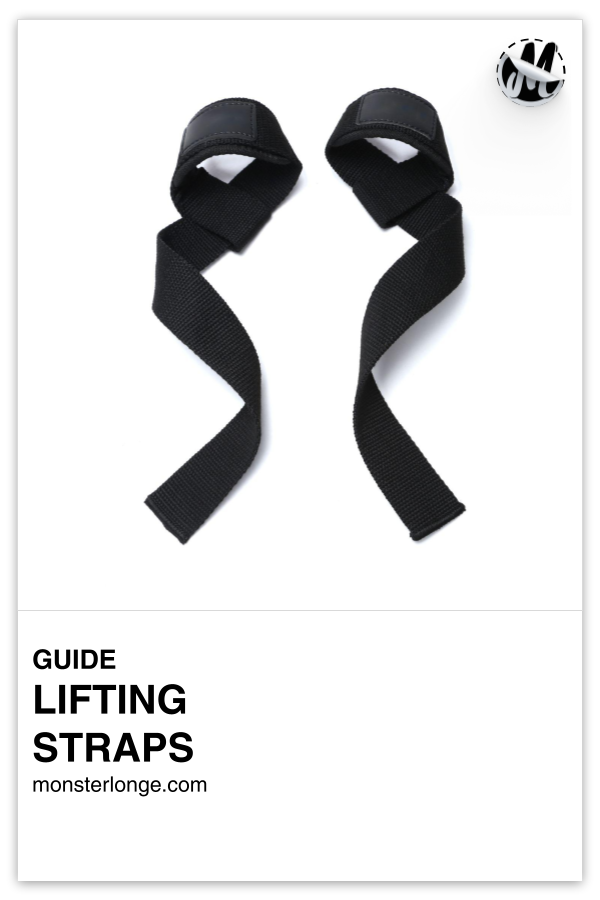
Lifting straps are strips of leather, canvas, or nylon that have a loop at one end, which you place the other unlooped end through to create a circle. Through that circle you place your hand so the strap lays between your thumb and index finger, with you then pulling to tighten the strap around the wrist. Once the strap is wrapped around your wrist, you then wrap the remaining fabric around a barbell or dumbbell. To further tighten the strap, you then twist the bar towards you.

Lifting straps are designed to improve the grip and are intended for pull movements that involve the back and trapezius muscles, such as deadlifts, shrugs, and rows, for instance. The main drawback against relying on straps for EVERY…SINGLE…LIFT is that grip strength is weakened by the fact that they transfer the load from the forearms, resulting in them not developing because they don’t do as much of the work as they should. For this reason, it’s best to go without straps and only bust them out on your heaviest sets.1Or try lifting chalk.
Now, although straps are used almost exclusively for back and trap work, they serve yet another function. As it turns out, many people have difficulty doing front squats with an Olympic or cross-arm grip because, respectively, they lack the forearm and elbow flexibility or don’t have big enough shoulders to comfortably hold the barbell in place. For them, it’s advantageous to loop a pair of lifting straps around the barbell, set themselves under the bar so it rests on their shoulders, then squat as they hold onto the ends of the straps, which forces their elbows to remain up and their arms parallel to the floor to prevent them from being carried forward by the weight and then faceplanting.
Glossary: arms, barbell, deadlift, dumbbell,muscle, squat, squats, traps

- Just The Tip #4441 - May 5, 2026
- Just The Tip #400 - May 4, 2026
- Just The Tip #3017 - April 30, 2026