
Why on earth would you ever eat fucking potatoes?!?!, you ask incredulously.
Good question!
Potatoes = 🤮
After all, because potatoes are incredibly cheap and your parents were broke as hell, you grew up eating them in virtually every meal as a child and now their taste and texture bring back the trauma of the poverty you escaped from 🤮
But here’s the thing…
Potatoes are a significant contributor to daily intake of vitamin C, a nutrient that has many functions, such as supporting the immune system, helping the body absorb iron from plant-based sources, and playing a necessary role in the formation of collagen for the growth and repair of various tissues like skin, bone, tendons, ligaments, cartilage, and blood vessels. Ascorbic acid, or vitamin C, also has antioxidant properties that protect the cells from damage that causes chronic conditions like cancer, cardiovascular disease, and arthritis, among others.
In addition to providing anywhere from 30-45 percent of the recommended daily value of vitamin C, a medium potato also supplies about 15-17 percent of the recommended daily value of potassium, which is a mineral and electrolyte that helps maintain fluid balance; move nutrients into cells and remove waste; transmit nerve signals; trigger muscle contractions; and regulate blood pressure to reduce the risk of stroke and heart disease.
Potatoes are an excellent source of many other vitamins and minerals, not just potassium and vitamin C. But beyond the thiamin, folate, iron, manganese, and riboflavin that’s found in potatoes, they’re particularly dense in carbs, most of which is starch. Normally, the abundance of starch in food can be a bad thing but that depends on the specific item and in the case of potato dishes that aren’t highly processed and refined, it’s not much of an issue because the type of starch that’s present is of the resistant kind. Now, what’s so great about resistant starch is that it has the ability to reduce hunger and promote the feeling of fullness like fiber does while differing in its ability to break down into short-chain fatty acids that increase fat burning.
Yeah, I know, potatoes sound mighty, mighty tasty right about now!
NOTE (1): Vitamin C and potassium are mostly concentrated in the skin, as is fiber, which helps regulate hunger by managing blood sugar and promoting the feeling of fullness. So to take advantage of their respective benefits, it’s advised to make use of potatoes with their peel on the flesh. How potatoes are cooked also plays a factor in nutritional value, as baking and microwaving helps preserve more nutrients than boiling.
NOTE (2): All varieties of potatoes contain resistant starch and their content can be increased by baking or boiling them and leaving them in the fridge overnight before consuming them cold.

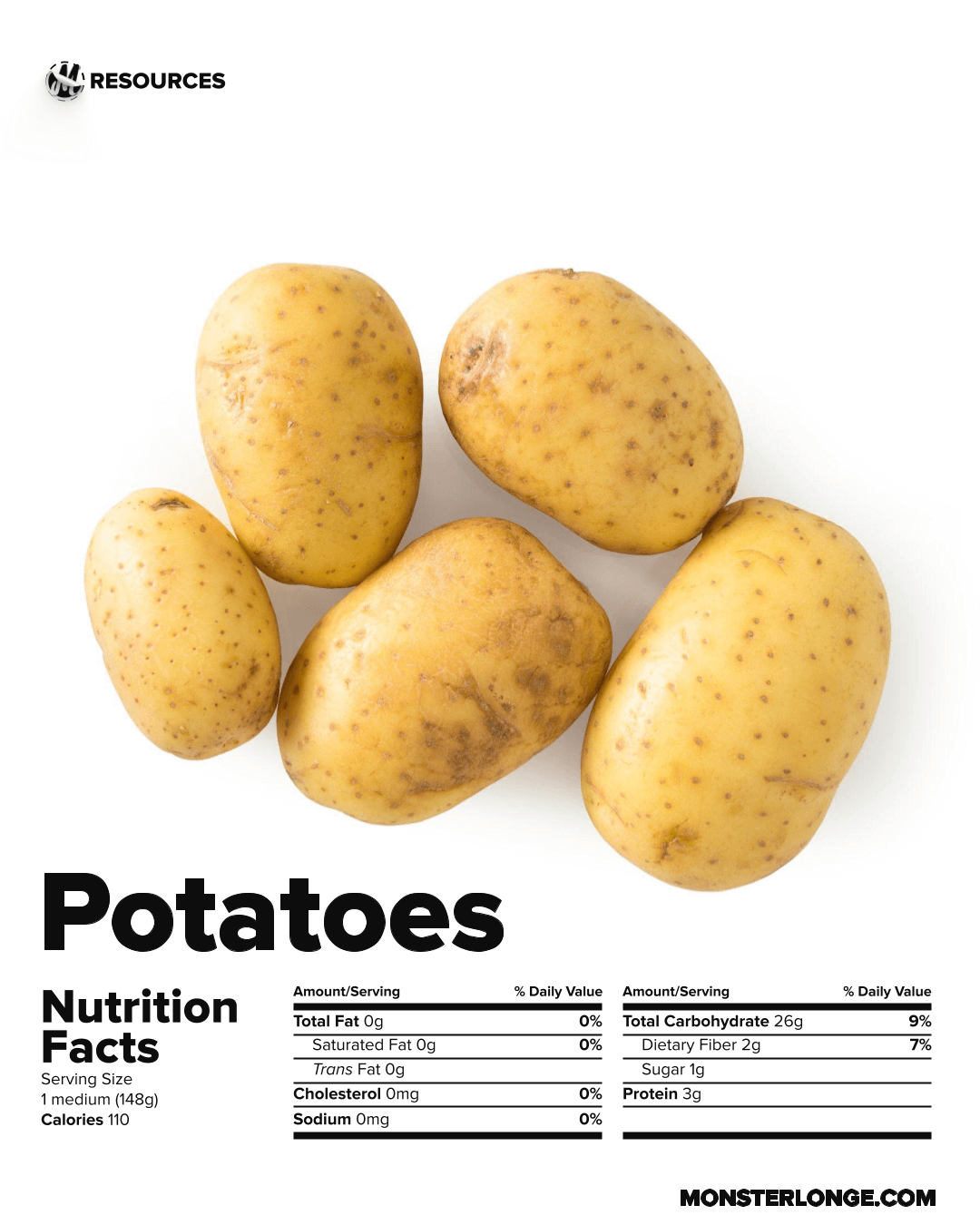
Potato Nutrition Facts
Serving Size 1 medium (148g)
• Calories: 110
• Total Fat: 0g
• Cholesterol: 0mg
• Sodium: 0mg
• Total Carbohydrate: 26g
• Dietary Fiber: 2g
• Sugar: 1g
• Protein: 3g

- Just The Tip #4441 - May 5, 2026
- Just The Tip #400 - May 4, 2026
- Just The Tip #3017 - April 30, 2026