
The South Beach Diet
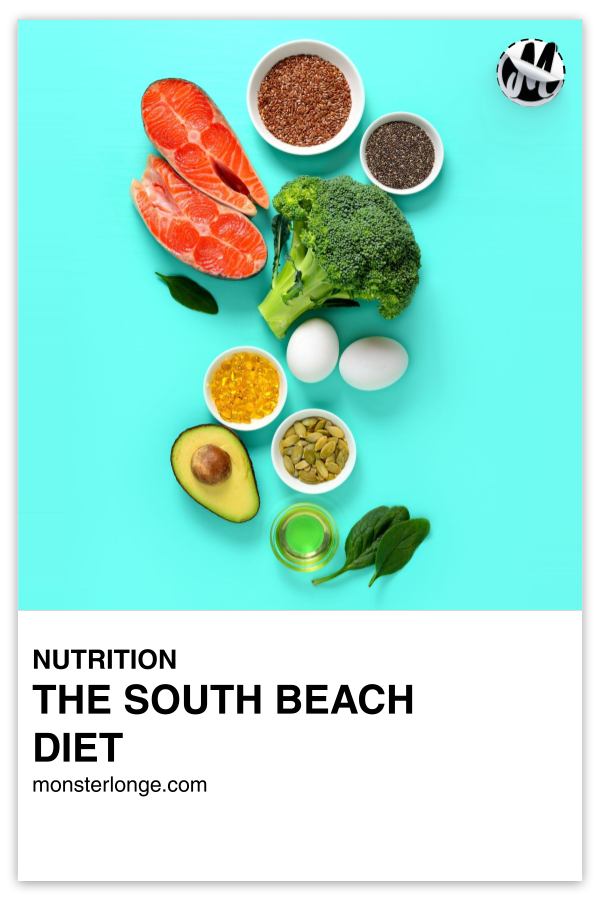
Would it be advantageous to lose weight with the South Beach diet before possibly hitting South Beach for some fun in the sun?
Let’s find out!
Background:
In conjunction with Marie Almon, chief clinical dietician at the Mount Sinai Cardiac Prevention Center in Miami Beach, Florida, the South Beach diet was developed in the 1990s by Dr. Arthur Agatston in response to his dissatisfaction with the low-fat diet recommended by the American Heart Association, which his obese cardiac patients at the same aforementioned hospital had difficulty adhering to and seeing results from.1The South Beach neighborhood in Miami Beach is where Agaston practiced and is the namesake of the diet. That there solves the mystery of why the diet is called what it is, which you and I both know was going to keep you up at night no matter how vehemently you deny that you were even wondering about it. Upon years of helping his patients achieve success in reducing their risk factors for heart problems, in addition to losing weight as an unintended byproduct, his approach was set forth in a book and made available to the greater public in 2003 with the release of The South Beach Diet: The Delicious, Doctor-Designed, Foolproof Plan for Fast and Healthy Weight Loss.
Overview:
Originally devised as a diet to help people reduce the risk of heart disease, the South Beach diet is now a three-phase, rapid weight loss program that centers on carb restriction. However, rather than simply limiting carbs like other traditional low-carb diets, the South Beach diet is more focused on restricting carbs via the selection of the right ones by way of the glycemic index, a scale from 1-100 that compares foods on how fast the carbs in that food affect blood glucose and insulin levels, with foods that are 55 and above categorized as medium or high GI foods because they digest quickly and spike blood sugar. Depending on the type of carb source, this spike can result in the release of a shitload of insulin, which can not only lead to the storage of fat but also a crash that leaves you feeling hungrier so you end up consuming more calories than need be. Conversely, foods that are 55 and below are known as low GI foods because they digest slowly and gradually release sugar into the bloodstream, thereby preventing a spike in blood glucose and a corresponding insulin response. The South Beach diet functions primarily by restricting the intake of high GI foods in favor of those with a lower GI to help stabilize blood sugar so a dieter is inclined to eat less food due to feeling fuller longer and experiencing fewer hunger pangs, in addition to the body becoming less reluctant to store fat.
What To Eat:
On the South Beach diet, high GI foods are categorized as “bad” carbs and are limited while low GI foods are known as “good” carbs and are emphasized. In addition to this differentiation between “good” and “bad” carbs based on their glycemic index, dietary fat is also set apart as “good” and “bad” based on their chemical structure, or how saturated they are. As a diet that’s divided into three phases with differing purposes, what “good” carbs and fat one is allowed to eat depends on the exact phase of the South Beach diet they’re in.
In greater detail, the first phase of the current version of the South Beach diet no longer lasts for two weeks but is now a 7-day reboot. During these seven days, the aim is to stabilize blood sugar levels and reduce cravings by eating three balanced meals and two snacks from a menu consisting of only lean protein,2e.g. skinless chicken and turkey, Cornish hen, pork tenderloin, lamb, flank steak, low fat or fat-free cold cuts, eggs, seafood, tofu, etc. non-starchy vegetables,3e.g. asparagus, artichokes, broccoli, cauliflower, tomatoes, squash, eggplant, rutabaga, salad greens, etc. and healthy fats.4e.g. cashews, walnuts, pistachios, nut butters, pumpkin seeds, sesame seeds, chia seeds, coconut milk, coconut oil, corn oil, flaxseed oil, extra virgin olive oil, olives, avocado, reduced-fat cheese, etc. Upon completion of the rapid weight loss phase, during which a dieter is expected to lose as many as 7 lbs, the second phase starts and is to continue for as many weeks as necessary until the goal weight is achieved. During this phase, weight loss is expected to slow down to 1-2 lbs per week as all the foods from the first phase are allowed while a limited amount of “good” carbs are reintroduced, such as starchy vegetables,5e.g. carrots, turnips, sweet potatoes, yams, etc. most fruit,6e.g. apples, apricots, blueberries, strawberries, cherries, grapefruit, etc. whole grains,7e.g. oatmeal, barley, buckwheat, whole-grain cereals, whole-grain bread, whole-grain pasta, couscous, brown rice, wild rice, rice noodles, tortillas, popcorn, etc. and beans and legumes,8e.g. black beans, pinto beans, white beans, navy beans, lentils, peas, edamame, hummus, etc. as well as up to two servings of alcohol per week.9Alcoholic beverages should be low in carbs, like light beer or dry wine. Once one’s desired weight is reached, the maintenance phase begins. The intention here is to turn the diet into a lifestyle and all guidelines from the previous phases are included. However, while the dietary guidelines from the other phases should be adhered to regularly, no food is truly off limits and one is allowed to eat “bad” carbs or fats so long as it’s occasionally and in moderation.10If one does overindulge consistently enough that they get off track, they’re advised to return to the first phase and then work their way back to phase three again.
What Not To Eat:
The foods that aren’t allowed on the South Beach diet depends on which of the first two phases that a follower is in. During phase one, the foods to avoid are virtually all carbs, both “good” or “bad”, which includes all fruit; corn, carrots, potatoes, and other starchy vegetables; bread, pasta, rice, and other grains and products made from them; beans and legumes; and sugary foodstuff, such as fruit juice, honey, maple syrup, cake, cookies, and candy. Fatty meat, whole milk, butter, and alcoholic beverages are also examples of things not allowed during the first initial seven days of the South Beach diet. In phase two, a larger selection of fruits and vegetables is made available but those that are high in natural sugars still aren’t allowed, such as dates, figs, pineapples, watermelon, beets, corn, and white potatoes. Additionally, the ban from the first phase remains against foods high in refined carbs; fatty cuts of meat, whole milk, butter, and anything else that has a high saturated fat count; and all alcohol that isn’t light beer or dry wine.
Results:
A study of 20 overweight and obese individuals with metabolic syndrome found that after 12 weeks of undergoing the first two phases of the South Beach diet, the average weight loss was 11 lbs and 2 inches from around the waist.11For more on this study, see Hayes, Matthew, et al. “A Carbohydrate-Restricted Diet Alters Gut Peptides and Adiposity Signals in Men and Women with Metabolic Syndrome.” Journal of Nutrition, vol. 137, no. 8, Aug. 2007, pp. 1944-1950. The South Beach diet works for weight loss but research doesn’t support that it’s due to the stabilization of blood sugar via the consumption of “good” carbs with low to medium scores on the glycemic index, as claimed by Agatson.
So what explains weight loss then?
What explains weight loss is what explains it with virtually every other successful weight loss diet that’s heretofore been discussed on this site, and that explanation is a calorie deficit. In this particular case, the first phase excessively restricts carb choices to only leafy greens and cruciferous vegetables, making it difficult to load up on carbs and hit the 300 or so grams that people normally consume daily.12With carb intake reduced to well below the norm thanks to the limited menu of carbs, what should follow is the loss of water weight, as the body doesn’t have as much glycogen and its 3g of attached water in each muscle cell. This is one reason for why the scale should reflect weight loss on the South Beach diet. That’s one way that calories are reduced even though there’s no actual calorie counting on the South Beach diet. The other way that the diet creates a calorie deficit is with the consumption of protein, a macronutrient that works on the hormonal level to reduce hunger and promote fullness, which can have the effect of someone eating less total calories even though they’re not doing so intentionally. All of that should make weight loss occur on the South Beach diet, at least in the short term. When it comes to the diet keeping the weight off, though, more research is needed to determine that.13For example, one systematic review examining the long-term efficacy of South Beach, Atkins, Weight Watchers, and the Zone diets on weight loss was only able to find one long-term trial to include in the study, as opposed to the others that had more data to draw from. For more on this study, see Atallah, Renée, et al. “Long-Term Effects of 4 Popular Diets on Weight Loss and Cardiovascular Risk Factors: A Systematic Review of Randomized Controlled Trials.” Circulation, vol. 7, no. 6, Nov. 2014, pp. 815-827.
On the health side of things, many of the foods promoted by the South Beach diet have been shown to have protective effects on the heart. That’s because those foods, such as eggs, fish, skinless poultry, and extra virgin olive oil, for instance, contain unsaturated fats. Those “good” fats are known as such because they don’t contribute to the building up of cholesterol along the arterial walls, which then impedes blood flow to the heart and increases the risk of high blood pressure, stroke, and heart disease. The limited amount of carbs on the diet, especially from processed sources, should also have the effect of stabilizing blood glucose and lowering insulin levels to help prevent or control diabetes. While these are the health effects that the foods recommended by the South Beach diet should have and studies are suggestive of, the proof isn’t strong enough to reach certainty. Until that day comes, if ever, that research proves the theoretical real, what the current evidence shows stands, which is that the diet doesn’t reduce “bad” LDL cholesterol levels and whatever diabetes management occurs is a consequence of weight loss and not anything intrinsic to the type of food eaten.
Safety:
The South Beach diet shouldn’t incur any danger if the instructions in official literature, such as any of Agatson’s books, are followed accordingly. It’s only when someone elects to deviate that some complications may occur. For instance, it’s easy to experience the signs and symptoms of ketosis if the near total elimination of carbs during the first phase lasts for longer than a week.14e.g. nausea, dehydration, dizziness, headache, fatigue, lightheadedness, bad breath, heart palpitations, etc. Other potential problems arising from that first phase extending to any appreciable length beyond what’s recommended are the restrictions on fruits, grains, and starches resulting in deficiencies in fiber and B-complex vitamins.
Other:
In 2005, Agatson entered into a deal with Kraft, the largest U.S. food company, to launch a line of South Beach diet branded foods that included cereals, wraps, frozen pizzas, and meal-replacement bars and shakes. As part of that agreement, some already existing Kraft foods were also given the South Beach diet seal of approval, such as fat-free Philadelphia Light cream cheese, fat-free Cool Whip, Planters peanuts, and reduced-fat Triscuits crackers. In 2015, SBD Holdings Group Corp., the company that actually owns the South Beach diet, was acquired by Nutrisystem for $15M. Since then, the diet has been turned into a food delivery service with its own line of packaged and pre-portioned meals and snacks that allows followers far more options of things to supplement the food they prepare on their own.
Glossary: caloric deficit, calories, diet, dietary fat, fat, food, hormones, macronutrients, moderation, supplement, vitamin

- Just The Tip #4441 - May 5, 2026
- Just The Tip #400 - May 4, 2026
- Just The Tip #3017 - April 30, 2026